Manage AI capabilities like a CIO portfolio — build, buy, hire, retire — not a PM backlog. Five portfolio moves that beat ticket-by-ticket execution.
Why a 2–3 person in-house AI tiger team plus a 5-person agency beats either structure alone. Five reasons the hybrid dominates pure builds.
AI platforms (LangChain, Vercel AI SDK) need centralization. Tools (Promptfoo, Langfuse, Cursor) work distributed. When to centralize, when to let teams pick.
Hire, agency, or hybrid? Four variables decide: AI capability tier targeted, expected duration, IP sensitivity, and regional talent market. With worked outputs.
Four conditions where founders should refuse to build AI in-house: single AI engineer, no eval discipline, no production AI experience, no slack.
Four conditions where outsourcing AI is the wrong move: proprietary data, regulatory boundary, IP-critical workflow, eval-set sensitivity.
Most production AI systems should be deterministic prompt workflows, not agent loops. The decision frame: cost, debuggability, latency, and ReAct vs static DAG.
The classic build-vs-buy framework misses four axes deciding AI agent sourcing: orchestration depth, tool registry, eval ownership, on-call ownership.
Buy the model gateway (LiteLLM, Portkey, Helicone) — it's commodity. Build the prompt library — it's the actual moat. Two layers, two opposite sourcing verbs.
Token decay, agent template proliferation, and frontier leapfrogs will erase 60% of 2026 'build' AI decisions by 2027. Which 60% goes, which 40% survives.
Almost no enterprise should build a foundation model from scratch. This decision frame separates buy (default), fine-tune (cost or domain), and build (rare).
The first AI engineer becomes the bottleneck because they own evals, prompts, and on-call alone. Five symptoms, one diagnosis, and the distribution playbook.
The 30/70 hybrid AI engagement works only if the right 30% stays in-house. Five non-negotiable in-house assets, what to outsource, and how to enforce the line.
Ten questions to test whether your AI capability is actual defensibility or just expensive infrastructure. Score honestly — most AI moats fail the audit.
Six AI capabilities founders waste capacity over-building: model gateway, prompt registry, eval framework, embedding model, vector DB, telemetry.
Five AI capabilities you cannot safely outsource: eval test set, prompt registry, model-routing config, observability rules, kill switches.
pgvector, Pinecone, LlamaIndex, and Cohere rerank cover 90 percent of RAG infrastructure. What you can't differentiate by reinventing the rest.
Buy the eval stack: Promptfoo, Inspect, Langfuse, Helicone are commodity. Build the evaluator: test set, thresholds, interpretation. Why each side.
Stripe-Atlas-style AI wrappers accumulate as debt because the underlying primitive shifts faster than the wrapper. Why re-skinning is structural debt.
Most AI teams waste 30 to 50 percent of capacity building plumbing vendors ship. Five categories, why each is buy, and what to build instead.
Four questions resolve almost every AI build-buy-hire decision. Moat density, integration depth, decision velocity, and talent fit — with a worked checklist.
Eight principles for sourcing every AI capability in 2026. Build the moat, buy the rails, hire the judgment — and re-litigate every decision quarterly.
AI build-vs-buy decisions made in 2024 are likely wrong by 2026. Six conditions that shifted, a staleness test, and a one-quarter re-litigation playbook.
B2B SaaS playbook for AI consumption pricing: metering choices, commit-plus-overage, fair-use limits, and migration steps from per-seat without churn.
Cost-of-delay for AI: WSJF prioritization, AI-feature decay from token-price drops, and competitive timing windows. A defensible delay-cost model.
Cost-of-rework for AI: eval threshold misses, model-upgrade regressions, prompt registry rot. Capers Jones' 5-30x fix-cost lens applied to AI projects.
Per-seat AI pricing breaks because usage variance is 10-50x across seats. Why consumption pricing is structurally inevitable for AI products in 2026.
AI A/B tests need larger samples than traditional A/B tests. Why heterogeneous behavior, low effect sizes, and cost-of-error make sample size dominant.
As foundation models become infrastructure, capex/opex treatment shifts. The 2010s SaaS analogy decomposed. What to capitalize, what to expense.
Adapt cost-of-quality (CoQ) for AI projects. Prevention, appraisal, internal failure, external failure — quantified for evals, regressions, and incidents.
We saved X hours rarely shows up in revenue or headcount. Why CFOs distrust AI productivity claims and what defensible savings claims look like.
Five named cost-side root causes for runaway AI projects, each with failure shape, leading indicator, and a contract clause that prevents it.
AI value claims need an explicit counterfactual. Four candidates — do-nothing, off-the-shelf, in-house build, prior process — when each is right and the math.
Every AI project needs an insurance line — a 5-10% reserve for jailbreak patches, hallucination remediation, and post-launch red-team findings. Sized.
Most AI ROI claims do not survive a finance or internal-audit review. Seven failure modes, why each fails, and a CFO-defensibility checklist.
Six AI project pricing models ranked from worst to best by alignment with buyer outcomes. Per-seat to outcome-based — when each works, when each fails.
Story points are a relative-effort tool. AI work bottlenecks on eval-pass cycles, not implementation hours. Replace story points with eval-run budgeting.
Six AI project line items finance teams forget: eval-construction, model-upgrade re-eval, regression triage, prompt registry, cost-spike, on-call. Sized.
FinOps for AI projects — cost attribution, budget alerts, model routing, cache strategy, batching, off-peak inference. Tools, practices, and instrumentation.
Models get deprecated. Budget 5-15% of every AI project for forced migrations: what triggers them, what migration costs, and how to size the reserve.
A unit-economics framework for AI work that survives model upgrades. Define the action, decompose the cost, set thresholds your CFO can defend.
Feature-by-feature estimation breaks for AI work because inference cost varies wildly per call. Replace with unit economics: cost per action × volume.
The fixed-price AI project is over. Here is what replaces it: T&M with cap, eval-milestone billing, capacity reservation, hybrid discovery+production.
Inference cost is following the same trajectory database cost did in 2014 — from infra OpEx to per-feature COGS. Here is what changes for the CFO.
What a real $250K AI project covers in 2026 — engineering, inference, evals, observability, retainer — across a 12-week build and 12-week post-launch window.
AI projects have a distinctive cost curve — heavy year-1, 40 to 60 percent lower year-2. What falls, what stays, what may rise, and what it means for contracts.
Standard NPV systematically underprices AI projects. A three-component valuation — NPV plus capability premium plus optionality value — corrects the gap.
A four-axis framework for naming the opportunity cost of any AI project: delayed builds, foregone alternatives, senior-engineer time, and locked optionality.
Seven AI project TCO lines — eval test sets, re-evaluation, regression triage, inference variance, prompt registry, observability storage, retainers —.
Eight principles for budgeting AI projects in 2026. Evaluation cost replaces feature cost as the unit of account. Opinionated, signed, and quotable.
A 6-month payback rule kills the AI projects that compound. Replace it with three staged gates: 90-day eval, 12-month capability, 24-month compounding.
Eval engineering runs 30–40% of AI project budget across four sub-lines. Why it stays invisible in early budgets and how to surface it upfront.
Seven observability components installed before the first PR: trace store, cost telemetry, eval CI, prompt registry, errors, latency, alerts.
Senior AI agency engineers do 4-6 week residencies inside client orgs: fastest knowledge transfer, deepest data understanding, real-time eval pairing.
The five named cost axes of an AI project finance can audit: engineering, inference, eval discipline, observability, maintenance — with defensible ranges.
Traditional ROI calculators miss four AI-specific dynamics. A 4-component value model — capability, time-to-value, downside-risk, optionality — fits better.
A two-day, hour-by-hour blueprint for an AI agency kickoff: stakeholder cartography, eval rubric draft, ADR proposed, demo cadence, and kill-clause wording.
Annual AI agency contracts price too much risk into a single signature. Quarterly mandates with kill clauses and eval thresholds align incentives in 2026.
A 10-check code review standard for PRs that touch prompts, evals, or model config — eval added, threshold listed, prompt pinned, kill switch present.
Senior reviewer time gates eval, architecture, and model upgrades — yet agencies bill it like generic engineering hours. The leverage math and rate fix.
Seven structural lessons from a year of shipping production AI agents — eval pre-architecture, cost caps, trace-first debugging, monthly model upgrades.
The 9 named artifacts an AI agency should ship in the first 14 days: charter, eval baseline, data audit, narrative, ADR, access matrix, escalation tree, more.
The senior-vs-mid productivity gap is wider in AI agency work than anywhere else. Eval discipline, agent leverage, taste — the math behind a 5–10x curve.
Backlog → Doing → Done is wrong for AI work. The eval-gated Kanban: Researching, Eval-design, Eval-passing, Monitoring, regression queue, WIP limits.


Senior-only staffing, agent-first defaults, junior pairing on demand, eval-pass rate as utilization — the AI agency model that compounds with models.
Documentation goes stale on day one for AI systems. Eval suites are living artifacts. Pay AI agencies per eval threshold passed, not per document.
Six AI agency invoice red flags — inference markup, vague pro services, unverified milestones — and the contract clauses that prevent each.
A weekly one-page status template for AI engagements: shipped, eval delta, cost delta, blockers, risks, next-week plan, trace links.
AI agencies are already AI-native — the unsolved bottleneck is eval discipline. The Chief Evaluation Officer role decomposes what a CEvalO actually owns.
Eight elements of an AI agency case study, decoded line by line — what's real, what's marketing, and the questions that surface the difference in 15 minutes.
A five-step change-order process for AI agency engagements: trigger, sizing, pricing, approval, logging — plus how to refuse the absorbed-favor trap.
Eight AI agency contract anti-patterns with the typical clause language, why each is wrong, and the replacement language that makes the contract honest.
AI agencies should publish raw eval scores in case studies: recall@k, faithfulness, P95 latency, cost-per-call. Why most don't, why leaders will, the format.
Three operating models, six axes of comparison. What an AI agency, an AI product studio, and an AI consultancy actually are — and which one fits.
Twelve named markers — six for the AI agency to fire, six for the one to keep — plus a buyer-side worksheet to triage your current engagement in 30 minutes.
An AI product studio funds an internal product from a small client roster, retains IP, runs a 60/40 bench, reuses evals across both sides, hires senior-only.
Agent leverage and identical eval discipline have collapsed the gap between AI agencies and AI product studios. The hybrid is the only stable shape.
Five prerequisites that decide whether an AI agency should productize internal tooling — and the failure modes that kill the platform before it ships.
The named-product agent stack a 2026 AI agency standardizes on — agent loop, tool registry, memory, evals for non-determinism, guardrails, observability.
The named-product RAG stack a 2026 AI agency standardizes on — chunking, embeddings, vector store, reranker, hybrid retrieval, and the eval suite that gates it.
A paid 1-2 week pilot with one eval-bound deliverable, a named senior, a fixed budget, and a kill clause replaces the demo, the RFP, and the discovery dance.
Inside an SFAI-style operating cadence: a Mon–Fri studio week of plan-and-demo, eval review, architecture review, deep-work, and Loom client demo.
The 6 anti-patterns that wreck AI agency engagements: deck-first kickoff, eval-as-afterthought, milestone payments, AM-mediated comms, post-launch ghosting.
Seven capability axes a 2026 AI agency must demonstrate before signing — with proof artifacts, failure tells, and a 0-3 scoring scale per axis.
Decomposing the AI agency localization tax: when timezone overlap moves the eval needle, when it doesn't, and the four-hour rule that beats round-the-clock.
Five engagement shapes a disciplined AI agency should now decline — what each one costs in revenue, and what saying no protects in margin and reputation.
Six AI agency lock-in mechanisms — keys, prompts, evals, weights, architecture, juniors — and the six defusals every client should run from day one.
Traditional AI proposals list roles. Buyers should require named engineers, GitHub profiles, prior PRs, and a non-substitution clause. Here is what to write in.
The 1,000-engineer offshore AI body shop is structurally collapsing. Five reasons the model breaks in 2026, and the narrow band of work that survives.
Why nearshore (Latin America, Eastern Europe) beats far-offshore for AI agency work in 2026 — timezone overlap, eval pairing, IP, and the body-shop trap.
AI agency demos are theater: cherry-picked inputs, hidden manual fallbacks, faked latency. 6 named demo tells a buyer can use to break the illusion.
Five quiet leaks turn a 30% gross-margin AI engagement into a 13% one. The redbook discipline that puts the bottom line back where the SOW promised.
An 8-section pre-kickoff security review every CTO should run on an AI agency, mapped to OWASP LLM Top 10, NIST AI RMF, and EU AI Act Article 28.
A POV piece on why AI agencies that publish sanitized post-mortems win on trust, hiring, and pricing — modeled on Google SRE post-mortem culture.
Doubling an AI team from 5 to 10 multiplies communication overhead 5x and slows delivery. The paradox, the math, and what to do instead.
Reverse-engineering the 2026 AI agency hiring funnel: where senior AI engineers actually come from, how they're screened, and what an honest offer looks like.
A POV decomposition of $50K vs $500K vs $5M AI agency engagements: scope shape, eval rigor, team composition, timeline, and institutional outcomes.
Senior AI engineers lose career capital on junior-led agency work. Diagnose the four signs from inside, and decide when to escalate, push back, or leave.
The traditional agency PM role is the wrong fit for LLM-first work. What it becomes: artifact orchestrator, context curator, registry editor.
Seven AI agency exit-clause subclauses every founder must negotiate: 30-day termination, 14-day handoff, milestone IP transfer, retainer, no non-compete.
A 4-week AI agency knowledge transfer playbook: documentation audits, paired prompt sessions, eval-gated PRs, and observe-only handoff that earns repeat work.
Small AI studios need a Chief of Staff earlier than agency playbooks suggest. The role decomposed, the leverage quantified — $150K saves $400K a year.
The 30-minute AI agency standup format: eval delta, PR walkthrough, cost spike, agent regression triage, daily commitment - structurally different from scrum.
Ten buyer-side rules for working with an AI agency: keys, IP, demos, evals, kill clauses — and the concrete actions that protect your leverage.
A 2026 AI agency runs three quality layers — evals, observability, and a weekly review ritual. Named tools, what good looks like, what failure looks like.
A good AI agency refuses scope creep, eval skips, PII fine-tunes, silent model swaps, and cover-ups. The yes-agency is a bad agency.
Production-ready is a vague proposal claim. Decompose it into 8 axes — evals, observability, recovery, cost caps, security, on-call, rollback, runbook.
A 5-day discovery method that replaces 4-week AI scoping: day-by-day artifacts, eval rubric, ADR, and an eval-bound proposal by Friday.
Why milestone-based AI engagements quietly fail — and the eval-threshold, weekly-demo, 30-day-kill structure that replaces them in 2026.
Logos and case-study PDFs prove nothing about AI engineering. Ask for these 7 artifacts instead: real eval sets, traces, cost telemetry, post-mortems, PR diffs.
Feature-list scopes fail AI work because feature-completeness is binary while AI quality is continuous. Replace features with eval thresholds.
Six pricing principles a 2026 AI agency should commit to in writing — with rationale, contract language, and edge cases.
A 2026 AI dev studio's reference architecture — named tools, templates, rituals, and reusable artifacts that turn standardization into compounding margin.
Fixed-price AI contracts are broken: eval discovery rewrites scope, inference cost is variable, model upgrades reset the baseline. Use these alternatives.
AI agency proposals look different but say the same thing. Here is what actually distinguishes a real one: live evals, named PRs, real architecture.
Eight failure modes that recur across AI agency engagements — what each one looks like, the leading indicators, and the contract clauses that prevent them.
Standard monthly retainers misalign with how AI value is actually created. Decompose the paradox and prescribe outcome-based, eval-milestone alternatives.
Standard work-product clauses miss six AI artifact classes: weights, training data, embeddings, prompts, evals, base derivatives. The clauses to insist on.
Nine concrete signals it is time to fire your AI agency, plus how to escalate, exit cleanly, and document the relationship for the replacement search.
A day-by-day blueprint for the first 14 days of an AI agency engagement: artifacts, eval baselines, architecture, and the first eval-gated PR shipped.
The traditional RFP fails for AI work. Replace it with a paid 2-week pilot: named eval, named PR, named senior engineer, fixed budget, kill clause.
Commoditized LLMs don't hurt boutique AI agencies — they dismantle the moats that justified large firms. The structural argument for 5–15 person studios.
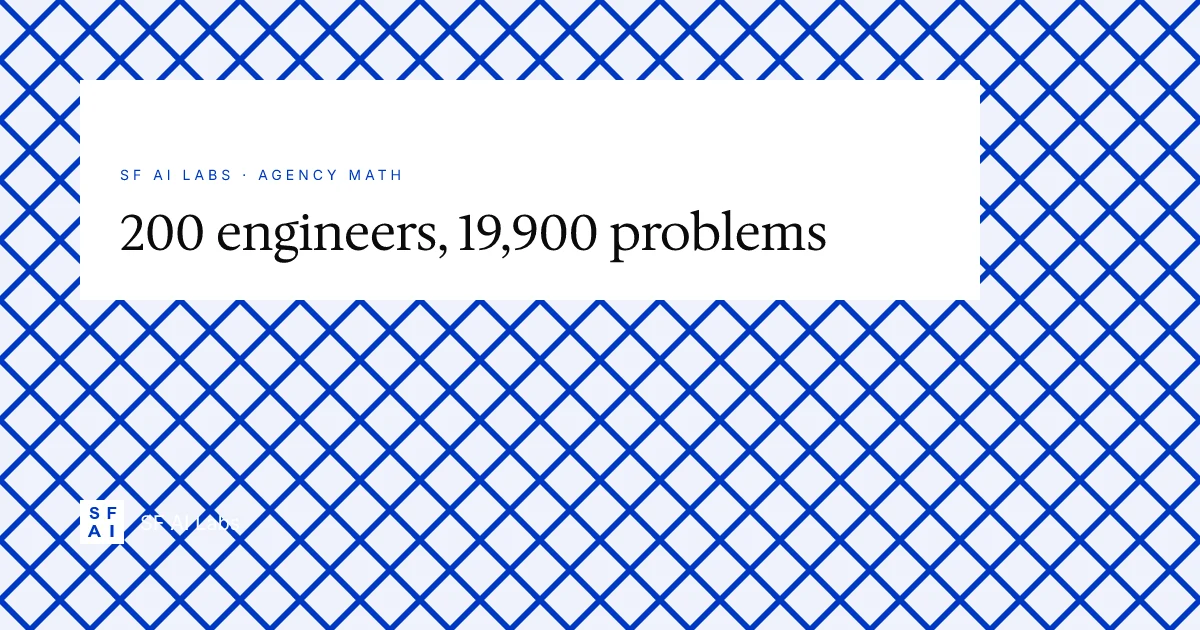
200 engineers means 19,900 communication pairs. 12 means 66. AI leverage made small teams the structural winner — and the headcount pitch a tell.
A 90-minute structured agenda for CTOs to vet AI agencies fast: artifacts, evals, architecture, post-mortems, commercials. Green/yellow/red answers included.
Why AI consultants ship slides while AI operators ship PRs, evals, and on-call rotations — and 8 questions that reveal which one you're talking to.
Eleven reference-call questions that pull real outcomes from past clients of AI agencies — what shipped, what broke, what the bill actually was.
Six trust signals, ordered from easy-to-fake to operator-only, that let buyers tell a real AI development agency from a reseller in one vetting call.
Decompose a 2026 AI dev studio into roles, rituals, review cadences, and reusable artifacts — with named owners, durations, and frequencies.
Inside the AI studio operating model: rituals, roles, artifacts, and tools that let 12 senior engineers out-ship a 50-person consultancy.
A framework of 7 contractual commitments — with clause language, compliance tests, and failure modes — every AI development agency should sign in 2026.
Staff augmentation breaks down for AI work. Five structural reasons the body-shop model is dying, and what replaces it in 2026.
AI ROI is not a single number. A four-stage maturity model: cost-out, capability earned, revenue-in, moat. Hardest gate and board narrative for each.
Per-eval pricing bills the agency per eval threshold passed — recall, faithfulness, latency. The case for replacing feature-list scoping with eval-tier billing.
Most AI projects die at finance review, not technical review. Five CFO-side failure modes — TCO, ROI, kill clause, vendor risk, cash flow.
AI project economics break SaaS-era capitalization. Inference is COGS, eval suites and prompt registries are intangible assets, observability is opex.
Five structural pressures will collapse the AI agency market by Q4 2027. Which archetypes survive, which die, and why the middle is gone.
AI cash-conversion is not SaaS cash-conversion. DSO/DPO applied to eval-gated billing, milestone work, and the buyer-side budget-to-impact lag.
Per-seat chargeback breaks for AI. Replace it with per-action billing, shared eval overhead, prompt-registry amortization, and a bursting buffer fund.
A one-page AI investment thesis for the board: six sections, two to three sentences each. Problem, success, budget, kill clause, ROI, alternative.
When buyers should pay 1.5x for 50% faster AI delivery and when they should not. Velocity premium mechanics, pricing structures, and the deals that justify it.
Features shipped is activity, not progress. Eval-pass success at a defended unit cost is the only honest measurement of an AI project's health.
Nine widgets for the AI burn-rate dashboard a CTO needs: cost-per-call, eval-pass-rate, scope-delta queue. Thresholds and instrumentation for each.
An AI QBR is not a software QBR. Eleven metrics — eval delta, unit cost, regression rate, retainer SLA — that turn a 90-day review into a real funding decision.
Value engineering for AI projects: 9 cost-reduction levers that protect eval threshold while cutting unit cost 40 to 70 percent. Sequenced by ROI.
A 9-section AI board memo template built on eval thresholds, unit cost, and staged-payback gates — not feature lists. With prompts and a worked example.
An AI caching strategy with a typical 11-day payback. Three cache layers, the eval-safe invalidation rules, and the failure modes.
Storage is the silent line item in AI project economics — vector DBs, traces, and replay logs. A defensible 2026 storage tax allocation.
Annual AI budgets misprice a project that re-evaluates every 90 days. Quarterly milestone funding aligns approval cadence with the model upgrade cycle.
SaaS gross margins are resetting from 80% to 60-70% as AI features mature. What that does to Rule of 40, pricing, and SaaS valuations.
The defensible 2026 AI license stack — eval, observability, vector, orchestration — and the SaaS lines most teams overpay or skip outright.
Why a model router saves about 38% of AI inference spend, with the routing taxonomy, the eval-anchored breakeven, and the failure modes.
How to choose AI regions in 2026 — the latency, cost, and compliance trade-off that drives multi-region AI architecture and a defensible decision rule.
When reserved AI compute capacity beats on-demand, with the breakeven math, the contract patterns, and the failure modes that erase the savings.
Where AI documentation actually pays back — runbooks, eval cards, and decision logs — and where it does not. A defensible budget for 2026.
Why AI cloud bills spike from egress — model-cloud splits, replay flows, eval traffic. Diagnostics, fixes, and a defensible egress budget for 2026.
Inference cost in SaaS-with-AI products is variable per revenue unit. ASC 606 and IFRS 15 say it sits in COGS, not OpEx. Here is the audit-grade case.
Cost-per-query is the most overused AI economics metric. Here is what makes it defensible, and when it beats cost-per-action versus when it does not.
A decision tree for AI build-vs-buy in 2026 that survives quarterly model upgrades, falling inference prices, and eval-cost reality.
AI features compress vertical SaaS gross margins from 80% to 65% but expand TAM 2-3x. The margin model and trade-off math, in three worked examples.
AI projects are uniquely vulnerable to sunk-cost continuation. Here is the 30-day kill rule that forces a binary go/no-go before the trap closes.
A worked 24-month TCO comparison for in-house, AI agency, and hybrid delivery — with eval cost, model-upgrade cost, and observability priced in.
The defensible eval-budget percentage for an AI project, the curve that drives it, and the staffing model that makes the percentage operational.
The defensible monitoring budget for AI projects, the incident-cost curve that drives it, and the observability stack that makes the trade rational.
Sunsetting an AI feature has a real cost line most budgets miss. The off-ramp model, the structural reserve, and a 90-day deprecation playbook.
The defensible red-team budget percentage for AI projects, the threat-model split, and the cadence that makes adversarial testing operational.
When a distilled smaller fine-tune beats a frontier model on cost-adjusted IRR. The decision rule, the sweet spot, and the cases where it loses.
Speed-to-revenue lifts AI project IRR; under-evaluation drags it down via regression cost. The shape of the curve, the sweet spot, and a decision tree.
Classic Rule of 40 breaks for AI-native SaaS because inference cost moves with growth. Recalibrate to Rule of 35, with offsets for compounding capability.
AI projects accumulate distinct technical debt — prompt drift, eval-set staleness, observability lag, model-version sprawl. How it accrues, taxes.
A 12-rung ladder naming the AI capabilities that should always be built, always be bought, or always be hired in 2026 — with the boundary cases that move.
Seven recurring AI budgeting failure modes. How each kills the budget, what it looks like in real engagements, and the structural prevention that actually.
Where 30 to 50 percent year-2 AI cost savings actually come from: model price decay, prompt optimization, caching, distillation, eval stability, and.
Eleven commitments that separate a 2026 AI development agency from a 2023 prompt-engineering shop. Opinionated, signed, and quotable.
Most AI engagements waste roughly 30% of budget on coordination. The tax decomposed into six cost lines, with a method to cut it back to 10%.
Build an OpenClaw travel agent that researches destinations, monitors flight prices, generates itineraries, and sends packing lists to Telegram.
Step-by-step Openclaw update guide covering backup, upgrade commands for npm and Docker, post-update checks, and rollback procedures.
Diagnose and fix OpenClaw VPS deployment errors including port conflicts, memory crashes, Node.js mismatches, and systemd failures.
Fix the OpenClaw skill not found error. Covers wrong paths, missing SKILL.md, typos, permissions, and watcher config with diagnostic steps.
Set up SSO for Openclaw using reverse proxy auth with Authentik, Keycloak, or Azure AD. Covers token management, session isolation, and API auth.
Budget OpenClaw for 5-50 person teams. Per-seat costs, shared vs individual instances, API allocation, and ready-to-use budget templates.
Fix your OpenClaw Telegram bot with this step-by-step troubleshooting guide covering tokens, privacy mode, webhooks, and more.
Use our time audit framework to calculate OpenClaw time savings for your small business. Includes ROI formulas, break-even analysis, and real scenarios.
Fix OpenClaw 429 errors with provider-aware fallback chains, retry strategies, request queuing, and monitoring that prevents rate limits before they hit.
Set up Openclaw as your AI recruiting agent. Covers resume parsing, candidate scoring, interview scheduling, communication templates, and pipeline tracking.
Calculate OpenClaw sales team ROI with our formula template. Compare costs vs SaaS tools vs headcount, plus break-even analysis.
Real TCO numbers for self-hosted vs managed Openclaw over 6 and 12 months. Includes VPS, API, maintenance, and hidden costs.
Fix expired OpenClaw OAuth tokens fast. Covers detection, refresh flows, automatic refresh setup, and provider-specific expiry times.
Cut Openclaw response times from 23s to 4s. Covers context management, model selection, prompt compression, caching, heartbeat tuning, and VPS sizing.
Build an Openclaw personal finance agent for expense tracking, budget alerts, bill reminders, savings goals, and tax prep. Includes skill configs and cost math.
Build an OpenClaw podcast workflow that processes transcripts, generates show notes, creates chapter markers, and publishes episodes automatically.
Debug OpenClaw agents with log locations, verbose mode, conversation tracing, skill failure fixes, and jq recipes for fast root-cause analysis.
Fix OpenClaw memory loss with this diagnostic guide. Covers compaction, wrong file paths, permissions, backup strategies, and the /new reset bug.
Set up OpenClaw for your team with per-user sessions, role-based access control, shared skills, and API cost tracking.
Build an OpenClaw newsletter curation agent that monitors RSS feeds, scores content, compiles digests, and publishes to email platforms.
Configure Openclaw for high availability with multi-instance redundancy, health checks, automatic restart, load balancing, and monitoring alerts.
Fix Openclaw high CPU usage with step-by-step diagnosis using top/htop, fixes for eager SDK loading, memory leaks, and Docker resource limits.
Compare Openclaw hosting costs across VPS, cloud, and local setups. Real pricing from Hetzner, DigitalOcean, Hostinger, AWS, and more.
A step-by-step incident response playbook for Openclaw agent failures: kill switches, rollback procedures, post-incident reviews, and prevention.
Fix openclaw heartbeat not triggering with this step-by-step diagnosis guide covering skip reasons, config traps, and known bugs.
Build an OpenClaw social media agent that schedules posts across Buffer, X, and LinkedIn with a content calendar, engagement monitoring, and analytics.
OpenClaw costs $15-40/mo vs $400-3,000/mo for a VA. We break down when each option wins by task type, budget, and business needs.
Set up OpenClaw webhooks to receive events from GitHub, Stripe, and Shopify. Covers endpoint config, payload processing, and signature verification.
Set up OpenClaw OAuth for OpenAI, Anthropic, and Google. Step-by-step provider config, token management, and multi-model switching.
Real OpenClaw costs broken down: hosting ($5-15/mo), API tokens ($1-150/mo), and the hidden heartbeat expense most guides skip.
Write effective OpenClaw agent instructions with structured prompting, persona definitions, task decomposition, and few-shot examples.
Build an OpenClaw SEO monitoring system that tracks rankings, watches competitors, and sends daily briefings for under $15/month.
Build custom OpenClaw skills from scratch. Complete SKILL.md anatomy, three copy-paste examples, testing workflow, and ClawHub publishing.
Build an OpenClaw lead research pipeline that finds prospects, enriches company data, scores leads, and delivers a daily briefing to your CRM.
Build an OpenClaw workflow that turns meeting transcripts into structured summaries, extracts action items, and sends follow-up emails automatically.
Configure OpenClaw with multiple AI models, fallback chains, and cost-optimized routing across GPT, Claude, and Gemini providers.
Fix your Openclaw agent when it stops responding. Covers API key, memory, crashes, Telegram, heartbeat, and 6 more causes with exact diagnostic steps.
How real estate agents use Openclaw to automate lead follow-up, listing alerts, and appointment scheduling via WhatsApp and Telegram.
Use Openclaw to automate candidate sourcing, resume screening, personalized outreach, and interview scheduling. Self-hosted, private, recruiter-ready.
Deploy Openclaw as a SaaS onboarding and support agent. Covers trial conversion, churn alerts, health scoring, ticket triage, and renewal workflows.
Configure OpenClaw heartbeat scheduling to make your agent act proactively. Covers interval tuning, heartbeat.md examples, cost control, and debugging.
Use Openclaw to automate portfolio alerts, client reports, meeting prep, and compliance docs for your financial advisory practice.
Use OpenClaw to automate time tracking, invoicing, payment follow-ups, and tax prep for $15-40/mo. A practical guide for freelancers.
Deploy Openclaw as a self-hosted AI agent for healthcare admin. Covers appointment reminders, prescription refills, intake forms, and HIPAA positioning.
How marketing agencies use Openclaw to automate campaigns across 10-50+ client accounts with scheduling, reporting, and monitoring.
Configure Openclaw file system access with least-privilege permissions. Covers sandbox setup, directory policies, PDF/CSV processing, and security.
Deploy Openclaw as your consulting firm's AI agent for market research, proposal drafting, client briefings, and competitive analysis.
Deploy Openclaw as your e-commerce AI agent. Covers Shopify, WooCommerce, and Stripe integration for orders, support, inventory, and cart recovery.
Deploy Openclaw as an AI grading assistant and student communication hub. Covers rubric automation, deadline reminders, parent updates, and attendance alerts.
Configure Openclaw data retention by compliance framework. Includes GDPR, HIPAA, and SOX retention schedules with copy-paste config blocks.
Deploy Openclaw in Docker with a production-ready docker-compose.yml. Covers volumes, health checks, auto-restart, env vars, and security.
Set up OpenClaw as your email agent: Gmail connection, triage rules, auto-drafted replies, daily Telegram summaries, and heartbeat inbox checks.
Deploy Openclaw on-premise with full data sovereignty. Covers Docker setup, RBAC, API key management, audit logging, and security hardening.
Set up OpenClaw cron jobs to schedule daily briefings, weekly reports, and recurring automations. Covers cron syntax, session types, cost control, and recipes.
Build custom OpenClaw tools that go beyond skills. Tool architecture, plugin SDK, three production examples, and security.
Build an OpenClaw support agent that triages tickets, drafts responses, escalates by priority, monitors SLAs, and reports daily metrics.
Build an OpenClaw data entry agent that extracts data from emails, PDFs, and forms, maps fields, writes to Google Sheets or Airtable, and validates every row.
Map Openclaw's data flows to GDPR and SOC 2 requirements. Covers LLM provider policies, right to erasure, and local model options.
Configure OpenClaw browser modes for web scraping, form filling, and monitoring. Compare headless vs headed, set viewport and user-agent, handle auth.
Set up OpenClaw to automatically review pull requests. Configure GitHub webhooks, write review skills, and post comments on PRs.
Build an Openclaw agent that monitors competitor pricing, product launches, Reddit, and Hacker News, then delivers a daily Telegram digest.
Build an OpenClaw content workflow that researches, drafts, edits, and publishes articles with a daily Telegram brief and one-click approval.
A hand-picked list of the best OpenClaw skills, split into Official and Community, each with a one-line when-to-use trigger and a maintenance grade.
Install OpenClaw in five minutes with this step-by-step walkthrough. Prerequisites, install command, onboarding wizard, and a verified first run.
Learn how to use OpenClaw after installing it. Covers first tasks, Telegram messaging, memory, heartbeat, skills, and daily workflows.
OpenClaw is the largest open-source AI agent with 160K+ GitHub stars, but it is not a framework like LangChain. Here is how to evaluate it.
Genuine OpenClaw alternatives for 2026: Claude Code, Cursor, Cline, Aider, Continue, Goose, and OpenHands compared with honest pricing and trade-offs.
Cut OpenClaw API costs by 60-80% with model routing, prompt caching, and heartbeat tuning. Real numbers from our own deployments.
Deploy an API gateway in front of OpenClaw for per-team rate limiting, API key management, usage tracking, and cost allocation.
Configure Openclaw audit logging for SOC 2 and ISO 27001 compliance with SIEM integration, log rotation, and alerting.
Back up and restore your Openclaw agent config, memory, and skills. Includes automated daily backup scripts, encryption, and DR testing.
The OpenClaw browser tool runs headless Chromium via Playwright. Here is how it works, when to use it, and the prompt-injection risk developers miss.
Wire OpenClaw to Anthropic Claude 4.6: API keys, model selection across Opus, Sonnet, and Haiku, and prompt caching for lower cost and latency.
OpenClaw cost priced per workload and scaled to 1, 5, and 20 developers using current Claude 4.6 API rates. With routing and caching math.
The OpenClaw Dashboard gives platform teams visibility, policy, and spend control across every OpenClaw agent from a single pane of glass.
OpenClaw is two different projects: the 1997 Captain Claw fan reimplementation and the OpenClaw AI agent framework. Here is how to tell them apart.
OpenClaw gateway token explained: what it is, how it differs from a provider API key, how to obtain, rotate, scope, and store it safely.
Complete OpenClaw hardware requirements for every deployment scenario. Minimum specs, recommended server sizes, and production configurations.
Install OpenClaw via curl script, Docker, or Hostinger one-click. Covers macOS, Linux, and Windows WSL2 with a pre-flight checklist.
Compare OpenClaw install paths — curl script, Docker, Hostinger one-click, from source — with pros, cons, and a decision matrix by user profile.
A practical OpenClaw Mac mini setup guide. M4 vs M4 Pro RAM sizing, install, always-on, local LLMs, and when a Mac mini is the wrong choice.
Mission control is a pattern, not a product. Here is how routing, policy, telemetry, approvals, and cost caps fit together for OpenClaw fleets.
Developer reference for the openclaw npm package: install, pin versions, integrate with monorepos, fix EACCES and workspace errors, upgrade safely.
Configure OpenClaw to run on local models via Ollama. Walks through install, model choice, tool calling config, hardware brackets, and when to stay cloud.
OpenClaw is free open-source software. Real pricing comes from models, infra, and time. Here is the 2026 TCO breakdown with current Claude 4.6 rates.
How OpenClaw authors, edits, and renders Quarto .qmd files. YAML front matter, R/Python/Julia chunks, render loops, and prompt patterns.
A calibrated threat model for OpenClaw covering prompt injection, tool-use exfiltration, supply-chain risk, and credential leaks, plus concrete mitigations.
Wire OpenClaw agents to Telegram in under an hour. BotFather token, webhook vs polling, chat ID allowlists, and approval flows for mobile-first founders.
OpenClaw vs Claude Code compared across deployment, pricing, privacy, extensibility, governance, and ecosystem — with a clear buyer decision matrix.
OpenClaw is an open-source AI agent that runs on your machine, talks to you via Telegram, and acts on its own every 30 minutes. Here is what it does.
Get your Slack bot token in minutes. Create a Slack app, choose scopes, pick Socket Mode or HTTP, and install to your workspace.
Get your Stripe API key in minutes. Covers test vs live keys, publishable vs secret, restricted keys, rolling, and webhook secrets.
Get WhatsApp Business API access through Meta's Cloud API. Step-by-step: developer account, app setup, phone number, webhooks, templates.
Deploy Openclaw in air-gapped environments with local LLMs. Covers offline install, Ollama config, skill adaptation, and ITAR compliance.
Get your OpenAI API key in 3 minutes. Step-by-step: create account, generate key, set billing, and connect it to tools like Openclaw.
Get your Perplexity API key in minutes. Covers account setup, billing, Sonar models, pricing, and connecting to apps.
Get your SendGrid API key in 5 minutes. Covers account setup, sender verification, API key scopes, curl testing, and the 100 emails/day free tier.
Get your Shopify API key in 5 minutes. Step-by-step: create a custom app, configure scopes, get your access token, and connect it to tools.
Get your Groq API key in minutes. Step-by-step setup, free tier limits, supported models, pricing, and how to connect Groq to Openclaw.
HubSpot killed legacy API keys in 2022. Here's how to create a Private App token, pick the right scopes, and connect it to your tools.
Get your HuggingFace API token in minutes. Covers token types, fine-grained permissions, gated model access, and Inference API pricing.
Get your Mistral API key in minutes. Step-by-step: create account, set up billing, generate key, and connect to AI apps.
Get your Notion API key in minutes. Create an internal integration, copy your token, share pages, and test with curl.
Get your Discord bot token in 5 steps. Create app, enable intents, set permissions, build OAuth2 invite URL, and connect to your server.
Create a GitHub personal access token in minutes. Fine-grained vs classic, scope selection, security setup, and connecting to dev tools.
Get your Google Gemini API key in minutes. Step-by-step: sign in to AI Studio, generate key, configure billing, and connect to apps.
Create a Google Sheets service account in 10 minutes. Step-by-step: Cloud project, enable API, generate JSON key, share sheet.
Connect Zoho CRM to OpenClaw with OAuth 2.0 self-client setup, a custom skill file, and real API call templates. Full walkthrough in 25 minutes.
Create an Airtable personal access token in under five minutes. Step-by-step: scopes, Base ID, curl testing, and automation setup.
Get your Anthropic API key in minutes. Step-by-step: create account, generate key, set up billing, and connect Claude to your apps.
Get your Cohere API key in minutes. Steps: create account, generate key, understand trial vs production limits, and connect to apps.
Connect Supabase to OpenClaw with a custom skill. Automate database CRUD, monitoring, cleanup, and scheduled reports from Postgres.
Connect Twitter/X to OpenClaw using the X API v2 or OpenTweet bridge. Build a skill for posting, monitoring mentions, and tracking engagement.
Connect Vercel to OpenClaw and build a deployment monitor that alerts you to failures, tracks build times, and triggers rollbacks from Telegram.
Step-by-step guide to connect WhatsApp to OpenClaw. Configure the channel, scan the QR code, and run your AI agent from WhatsApp.
Step-by-step guide to connect Shopify to OpenClaw. Build a custom skill for orders, products, inventory, and abandoned checkout recovery.
Connect Signal to OpenClaw using signal-cli. Install, register, configure, and run your AI agent with end-to-end encryption on Signal.
Step-by-step guide to connect Slack to OpenClaw. Create a Slack App, configure bot tokens, set up Socket Mode, and build team automations.
Connect Stripe to OpenClaw and build an AI agent that monitors payments, alerts on failures, tracks churn, and delivers revenue summaries.
Connect Notion to OpenClaw with a custom skill. Query databases, create pages, and automate daily summaries from Telegram or WhatsApp.
Connect Pipedrive to OpenClaw with a custom skill. Automate deal tracking, follow-ups, and pipeline alerts from Telegram or WhatsApp.
Connect QuickBooks to OpenClaw with OAuth 2.0 setup, a custom skill file, and automated bookkeeping workflows. Full walkthrough.
Connect Salesforce to OpenClaw with OAuth 2.0 and a custom skill. Automate leads, contacts, and opportunities from Telegram.
Step-by-step guide to connect Linear to OpenClaw. Create a Linear API key, write a GraphQL skill, and automate issue tracking from chat.
Connect LinkedIn to OpenClaw using the official API or browser mode. Automate posts, monitor engagement, and manage outreach from chat.
Connect Mailchimp to OpenClaw with a custom skill. Get your API key, write the SKILL.md, and automate subscribers, campaigns, and A/B tests.
Connect Microsoft Teams to OpenClaw using Azure Bot Framework. Covers Entra ID registration, bot setup, manifest packaging, and enterprise use cases.
Step-by-step guide to connect Monday CRM to OpenClaw. Write a custom skill with GraphQL, automate board updates, and run your pipeline from chat.
Connect Google Calendar to OpenClaw in under 10 minutes. Full OAuth setup, custom skill walkthrough, and five automation recipes for meetings.
Connect Google Sheets to OpenClaw using a service account. Build a custom skill for automated data entry, reporting, and scheduled updates.
Step-by-step guide to connect HubSpot to OpenClaw. Build a custom skill, automate contacts and deals, and run your CRM from Telegram.
Connect Jira to OpenClaw in 15 minutes. Get your API token, install the Jira skill, and automate issue creation, sprint reports, and blocker alerts.
Step-by-step guide to connect Close CRM to OpenClaw. Build a custom skill, automate leads and activities, and run outbound sales from Telegram.
Connect Discord to OpenClaw in under 15 minutes. Create a bot, configure intents, set your token, and build community automations.
Connect your email to OpenClaw via IMAP and SMTP. Gmail app passwords, provider settings, custom skill code, and email-triggered automations.
Step-by-step guide to connect GitHub to OpenClaw. Set up PATs, install the GitHub skill, configure webhooks, and automate PR reviews.
Connect Airtable to OpenClaw with a custom skill. Create a PAT, write CRUD operations, and automate your database from chat.
Connect AWS to OpenClaw with IAM credentials and custom skills. Manage EC2, S3, Lambda, and CloudWatch from chat in under 30 minutes.
Connect Buffer to OpenClaw with a custom skill. Get your API token, write the SKILL.md, and automate social media scheduling across 11 platforms.
Step-by-step guide to connect Calendly to OpenClaw. Build a custom skill, automate meeting prep and follow-ups, and manage your schedule from Telegram.
How nonprofits use Openclaw to automate donor thank-yous, track grant deadlines, run communication sequences, and coordinate volunteers for $15-40/month.
How law firms use Openclaw to automate client intake, legal research summaries, deadline tracking, and billing. Practical workflows with setup examples.
Configure Openclaw persistent memory so your agent retains context across sessions. Covers memory.md structure, compaction, categories, and maintenance.
Complete guide to setting up OpenClaw: workspace files, memory, OAuth model selection, Telegram groups, browser modes, skills, heartbeat, and security.
Expert guide to verify ai agency expertise. Practical frameworks, evaluation criteria, and actionable steps for CTOs and technical leaders.
Expert guide to vet chatbot agency. Practical frameworks, evaluation criteria, and actionable steps for CTOs and technical leaders.
Expert guide to ai technical debt. Practical frameworks, evaluation criteria, and actionable steps for CTOs and technical leaders.
Expert guide to ai agency hiring timeline. Practical frameworks, evaluation criteria, and actionable steps for CTOs and technical leaders.
Expert guide to ai user acceptance testing. Practical frameworks, evaluation criteria, and actionable steps for CTOs and technical leaders.
Expert guide to vector database implementation. Practical frameworks, evaluation criteria, and actionable steps for CTOs and technical leaders.
Google Stitch now generates five screens at once with voice, infinite canvas, and MCP. When to use Stitch, when Figma still wins, and the exact workflow.
Expert guide to sales ai development. Practical frameworks, evaluation criteria, and actionable steps for CTOs and technical leaders.
Expert guide to semantic search implementation. Practical frameworks, evaluation criteria, and actionable steps for CTOs and technical leaders.
Compare specialized ai agency side by side. Pricing, features, pros/cons analyzed to help you choose the right option for your team.
Expert guide to supply chain ai agency. Practical frameworks, evaluation criteria, and actionable steps for CTOs and technical leaders.
Expert guide to real estate ai consulting. Practical frameworks, evaluation criteria, and actionable steps for CTOs and technical leaders.
Expert guide to ai consulting red flags. Practical frameworks, evaluation criteria, and actionable steps for CTOs and technical leaders.
Expert guide to retail ai consulting. Practical frameworks, evaluation criteria, and actionable steps for CTOs and technical leaders.
Expert guide to rag retrieval optimization. Practical frameworks, evaluation criteria, and actionable steps for CTOs and technical leaders.
Expert guide to rag development agency. Practical frameworks, evaluation criteria, and actionable steps for CTOs and technical leaders.
Get detailed rag development cost breakdowns for 2026. Compare rates, budget ranges, and hidden costs to plan your AI investment.
Expert guide to rag implementation process. Practical frameworks, evaluation criteria, and actionable steps for CTOs and technical leaders.
Compare rag vs fine-tuning side by side. Pricing, features, pros/cons analyzed to help you choose the right option for your team.
Expert guide to post-launch ai support. Practical frameworks, evaluation criteria, and actionable steps for CTOs and technical leaders.
Expert guide to prepare data for ai. Practical frameworks, evaluation criteria, and actionable steps for CTOs and technical leaders.
Expert guide to prompt engineering consulting. Practical frameworks, evaluation criteria, and actionable steps for CTOs and technical leaders.
Expert guide to rag architecture design. Practical frameworks, evaluation criteria, and actionable steps for CTOs and technical leaders.
Expert guide to multi-modal ai development. Practical frameworks, evaluation criteria, and actionable steps for CTOs and technical leaders.
Expert guide to ai rollout strategy. Practical frameworks, evaluation criteria, and actionable steps for CTOs and technical leaders.
Expert guide to nonprofit ai consulting. Practical frameworks, evaluation criteria, and actionable steps for CTOs and technical leaders.
Compare offshore ai development side by side. Pricing, features, pros/cons analyzed to help you choose the right option for your team.
Expert guide to manufacturing ai agency. Practical frameworks, evaluation criteria, and actionable steps for CTOs and technical leaders.
Compare mlops consulting side by side. Pricing, features, pros/cons analyzed to help you choose the right option for your team.
Expert guide to mlops implementation. Practical frameworks, evaluation criteria, and actionable steps for CTOs and technical leaders.
Expert guide to monthly ai development cost. Practical frameworks, evaluation criteria, and actionable steps for CTOs and technical leaders.
Get detailed llm integration pricing breakdowns for 2026. Compare rates, budget ranges, and hidden costs to plan your AI investment.
Expert guide to llm integration timeline. Practical frameworks, evaluation criteria, and actionable steps for CTOs and technical leaders.
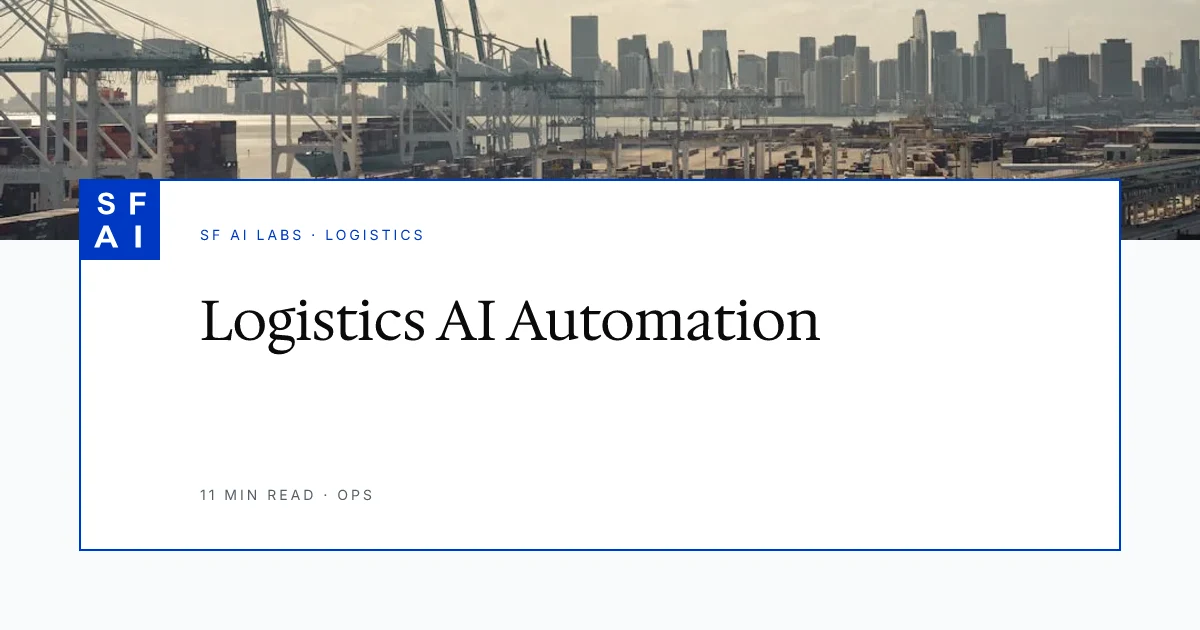
Expert guide to logistics ai agency. Practical frameworks, evaluation criteria, and actionable steps for CTOs and technical leaders.
Compare managed ai vs project side by side. Pricing, features, pros/cons analyzed to help you choose the right option for your team.
What separates effective CAIOs from figureheads: practical best practices for governance, ROI measurement, C-suite integration, and the first 90 days.
Expert guide to langchain development agency. Practical frameworks, evaluation criteria, and actionable steps for CTOs and technical leaders.
Expert guide to legal tech ai agency. Practical frameworks, evaluation criteria, and actionable steps for CTOs and technical leaders.
Expert guide to llm context window optimization. Practical frameworks, evaluation criteria, and actionable steps for CTOs and technical leaders.
Expert guide to llm fine-tuning services. Practical frameworks, evaluation criteria, and actionable steps for CTOs and technical leaders.
Claude reviews Figma MCP from direct experience: what it does, where it falls short, and what's missing. An honest take on AI-Figma integration.
An AI gains read-access to a classified design file and discovers something no one was supposed to find. A Dan Brown-style account of Figma MCP.
Both Figma and paper.design have MCP servers, but they work completely differently. Here's an honest comparison for teams choosing between them.
Expert guide to choose ai development agency. Practical frameworks, evaluation criteria, and actionable steps for CTOs and technical leaders.
Expert guide to hr tech ai agency. Practical frameworks, evaluation criteria, and actionable steps for CTOs and technical leaders.
Expert guide to hybrid ai systems. Practical frameworks, evaluation criteria, and actionable steps for CTOs and technical leaders.
Expert guide to insurance ai agency. Practical frameworks, evaluation criteria, and actionable steps for CTOs and technical leaders.
Expert guide to generative ai implementation. Practical frameworks, evaluation criteria, and actionable steps for CTOs and technical leaders.
Expert guide to hidden ai development costs. Practical frameworks, evaluation criteria, and actionable steps for CTOs and technical leaders.
Expert guide to outsourced ai team. Practical frameworks, evaluation criteria, and actionable steps for CTOs and technical leaders.
Expert guide to hospitality ai agency. Practical frameworks, evaluation criteria, and actionable steps for CTOs and technical leaders.
Expert guide to evaluate ai developer portfolio. Practical frameworks, evaluation criteria, and actionable steps for CTOs and technical leaders.
Expert guide to evaluate llm development company. Practical frameworks, evaluation criteria, and actionable steps for CTOs and technical leaders.
Expert guide to financial services ai. Practical frameworks, evaluation criteria, and actionable steps for CTOs and technical leaders.
Get detailed generative ai consulting fees breakdowns for 2026. Compare rates, budget ranges, and hidden costs to plan your AI investment.
Expert guide to energy ai agency. Practical frameworks, evaluation criteria, and actionable steps for CTOs and technical leaders.
Expert guide to enterprise ai consulting. Practical frameworks, evaluation criteria, and actionable steps for CTOs and technical leaders.
Plan your enterprise ai budget with our detailed framework. Budget allocation, timeline planning, and resource requirements covered.
Expert guide to enterprise ai migration. Practical frameworks, evaluation criteria, and actionable steps for CTOs and technical leaders.
Expert guide to customer service ai agency. Practical frameworks, evaluation criteria, and actionable steps for CTOs and technical leaders.
Expert guide to ecommerce ai agency. Practical frameworks, evaluation criteria, and actionable steps for CTOs and technical leaders.
Expert guide to edtech ai agency. Practical frameworks, evaluation criteria, and actionable steps for CTOs and technical leaders.
Salesforce Einstein vs HubSpot Breeze, Zoho Zia, Dynamics 365 Copilot, and Freddy AI — pricing, features, and practical guidance compared.
An honest comparison of Clay and LinkedIn Sales Navigator for B2B prospecting. Covers pricing, enrichment, integrations, and which tool fits your team size.
A hands-on comparison of Cubic.dev and CodeRabbit for AI code review. We break down accuracy, pricing, noise levels, and which tool fits your team's workflow.
Salesforce vs AI-native CRMs like Attio, HubSpot Breeze, and Folk — comparing features, pricing, AI depth, and when each fits.
Get detailed custom llm cost breakdowns for 2026. Compare rates, budget ranges, and hidden costs to plan your AI investment.
Expert guide to conversational ai development. Practical frameworks, evaluation criteria, and actionable steps for CTOs and technical leaders.
Get detailed custom ai solution pricing breakdowns for 2026. Compare rates, budget ranges, and hidden costs to plan your AI investment.
Compare custom ai vs off-the-shelf side by side. Pricing, features, pros/cons analyzed to help you choose the right option for your team.
Expert guide to custom gpt development. Practical frameworks, evaluation criteria, and actionable steps for CTOs and technical leaders.
Compare claude vs gpt-4 enterprise side by side. Pricing, features, pros/cons analyzed to help you choose the right option for your team.
Expert guide to compare ai proposals. Practical frameworks, evaluation criteria, and actionable steps for CTOs and technical leaders.
Expert guide to construction ai consulting. Practical frameworks, evaluation criteria, and actionable steps for CTOs and technical leaders.
Expert guide to ai model improvement. Practical frameworks, evaluation criteria, and actionable steps for CTOs and technical leaders.
Compare chatbot platform vs custom side by side. Pricing, features, pros/cons analyzed to help you choose the right option for your team.
Expert guide to ai developer references. Practical frameworks, evaluation criteria, and actionable steps for CTOs and technical leaders.
Expert guide to choose ai automation consultant. Practical frameworks, evaluation criteria, and actionable steps for CTOs and technical leaders.
Expert guide to choose generative ai consultant. Practical frameworks, evaluation criteria, and actionable steps for CTOs and technical leaders.
Expert guide to assess ai implementation partner. Practical frameworks, evaluation criteria, and actionable steps for CTOs and technical leaders.
Expert guide to ai change management. Practical frameworks, evaluation criteria, and actionable steps for CTOs and technical leaders.
Get detailed chatbot development cost breakdowns for 2026. Compare rates, budget ranges, and hidden costs to plan your AI investment.
Expert guide to chatbot development process. Practical frameworks, evaluation criteria, and actionable steps for CTOs and technical leaders.
Expert guide to ai security services. Practical frameworks, evaluation criteria, and actionable steps for CTOs and technical leaders.
Compare ai strategy vs implementation side by side. Pricing, features, pros/cons analyzed to help you choose the right option for your team.
Expert guide to ai testing process. Practical frameworks, evaluation criteria, and actionable steps for CTOs and technical leaders.
Expert guide to ai workflow automation. Practical frameworks, evaluation criteria, and actionable steps for CTOs and technical leaders.
Expert guide to ai project kickoff. Practical frameworks, evaluation criteria, and actionable steps for CTOs and technical leaders.
Expert guide to ai project management. Practical frameworks, evaluation criteria, and actionable steps for CTOs and technical leaders.
Get detailed ai proof of concept cost breakdowns for 2026. Compare rates, budget ranges, and hidden costs to plan your AI investment.
Expert guide to ai scalability planning. Practical frameworks, evaluation criteria, and actionable steps for CTOs and technical leaders.
Expert guide to ai performance optimization. Practical frameworks, evaluation criteria, and actionable steps for CTOs and technical leaders.
Expert guide to ai proof of concept. Practical frameworks, evaluation criteria, and actionable steps for CTOs and technical leaders.
Expert guide to ai product development phases. Practical frameworks, evaluation criteria, and actionable steps for CTOs and technical leaders.
Expert guide to ai project handoff. Practical frameworks, evaluation criteria, and actionable steps for CTOs and technical leaders.
Real data on AI tools that drive e-commerce revenue—Amazon's 35% attribution, Klaviyo's $3.8B BFCM, Zalando's -7% return rate. What works and what to skip.
Real AI use cases from Intercom, Notion, Canva, and HubSpot — with actual ROI numbers, named tools, and what to implement first.
62% of AI-generated code has vulnerabilities. How non-technical founders assess vendor code quality using real tools, data, and measurable signals.
Compare no-code AI tools by real pricing, user counts, and security tradeoffs. Covers Zapier, n8n, Lovable, Bolt, v0, Bubble, and more.
Expert guide to ai model deployment. Practical frameworks, evaluation criteria, and actionable steps for CTOs and technical leaders.
Expert guide to ai model evaluation. Practical frameworks, evaluation criteria, and actionable steps for CTOs and technical leaders.
Expert guide to ai monitoring. Practical frameworks, evaluation criteria, and actionable steps for CTOs and technical leaders.
Get detailed ai mvp cost breakdowns for 2026. Compare rates, budget ranges, and hidden costs to plan your AI investment.
Expert guide to ai due diligence. Practical frameworks, evaluation criteria, and actionable steps for CTOs and technical leaders.
Expert guide to ai embedding models. Practical frameworks, evaluation criteria, and actionable steps for CTOs and technical leaders.
Expert guide to ai guardrails. Practical frameworks, evaluation criteria, and actionable steps for CTOs and technical leaders.
Expert guide to ai integration testing. Practical frameworks, evaluation criteria, and actionable steps for CTOs and technical leaders.
Build custom fraud detection AI with proven architectures (GNN, transformers), real case studies from JPMorgan and Stripe, and cost benchmarks.
Expert guide to ai development milestones. Practical frameworks, evaluation criteria, and actionable steps for CTOs and technical leaders.
Expert guide to startup ai agency. Practical frameworks, evaluation criteria, and actionable steps for CTOs and technical leaders.
Expert guide to ai development timeline. Practical frameworks, evaluation criteria, and actionable steps for CTOs and technical leaders.
Expert guide to ai document processing. Practical frameworks, evaluation criteria, and actionable steps for CTOs and technical leaders.
Expert guide to ai agency onboarding. Practical frameworks, evaluation criteria, and actionable steps for CTOs and technical leaders.
Expert guide to ai development roi. Practical frameworks, evaluation criteria, and actionable steps for CTOs and technical leaders.
Expert guide to ai documentation standards. Practical frameworks, evaluation criteria, and actionable steps for CTOs and technical leaders.
Expert guide to media ai agency. Practical frameworks, evaluation criteria, and actionable steps for CTOs and technical leaders.
Learn how to file an 83(b) election with the IRS, including the new e-filing option, mailing addresses, deadlines, and a cover letter template.
Compare ai consulting vs implementation side by side. Pricing, features, pros/cons analyzed to help you choose the right option for your team.
Expert guide to ai data pipeline. Practical frameworks, evaluation criteria, and actionable steps for CTOs and technical leaders.
Expert guide to ai developer certifications. Practical frameworks, evaluation criteria, and actionable steps for CTOs and technical leaders.
Get detailed ai development agency cost breakdowns for 2026. Compare rates, budget ranges, and hidden costs to plan your AI investment.
Compare boutique ai agency side by side. Pricing, features, pros/cons analyzed to help you choose the right option for your team.
Expert guide to ai discovery phase. Practical frameworks, evaluation criteria, and actionable steps for CTOs and technical leaders.
Get detailed ai consulting rates breakdowns for 2026. Compare rates, budget ranges, and hidden costs to plan your AI investment.
Compare ai consulting vs development side by side. Pricing, features, pros/cons analyzed to help you choose the right option for your team.
Expert guide to ai agent development. Practical frameworks, evaluation criteria, and actionable steps for CTOs and technical leaders.
Expert guide to ai api development. Practical frameworks, evaluation criteria, and actionable steps for CTOs and technical leaders.
Get detailed ai automation cost breakdowns for 2026. Compare rates, budget ranges, and hidden costs to plan your AI investment.
Expert guide to ai automation workflow. Practical frameworks, evaluation criteria, and actionable steps for CTOs and technical leaders.
Mobile apps cost 2-3x more than web apps due to dual codebases, device fragmentation, and app store overhead. Here's where the budget actually goes.
Expert guide to saas ai agency. Practical frameworks, evaluation criteria, and actionable steps for CTOs and technical leaders.
Expert guide to b2b saas ai agency. Practical frameworks, evaluation criteria, and actionable steps for CTOs and technical leaders.
Expert guide to ai agency contract. Practical frameworks, evaluation criteria, and actionable steps for CTOs and technical leaders.
Compare ai agency vs in-house side by side. Pricing, features, pros/cons analyzed to help you choose the right option for your team.
Expert guide to ai data privacy. Practical frameworks, evaluation criteria, and actionable steps for CTOs and technical leaders.
Expert guide to healthcare ai agency. Practical frameworks, evaluation criteria, and actionable steps for CTOs and technical leaders.
AI use cases that help HR tech companies automate recruiting, improve employee engagement, and reduce compliance risk at scale.
AI applications that help fintech companies detect fraud, automate compliance, and personalize financial services at scale.
AI applications that help legal tech companies automate document review, improve case outcomes, and reduce billable hour waste.
AI use cases that help healthcare startups improve patient outcomes, reduce administrative burden, and maintain HIPAA compliance.
AI applications that help real estate businesses automate lead qualification, property valuation, and client communication to close more deals.
Expert guide to agentic ai development. Practical frameworks, evaluation criteria, and actionable steps for CTOs and technical leaders.
Expert guide to agile ai development. Practical frameworks, evaluation criteria, and actionable steps for CTOs and technical leaders.
Expert guide to agriculture ai agency. Practical frameworks, evaluation criteria, and actionable steps for CTOs and technical leaders.
Compare ai advisory vs development partner side by side. Pricing, features, pros/cons analyzed to help you choose the right option for your team.
Expert guide to custom model training. Practical frameworks, evaluation criteria, and actionable steps for CTOs and technical leaders.
How AI is changing consulting, legal, accounting, and architecture. Real applications with ROI data and implementation insights.
AI automation ideas that help agencies reduce delivery time, cut costs, and scale operations without hiring more people.
Create compelling AI demos for investors. Compare tools that showcase your AI product's value without technical complexity.
Master AI strategy without coding. Top courses, books, and resources that teach business leaders how to evaluate and implement AI.
Top PM tools for AI projects. Compare Linear, Jira, and specialized platforms built for managing machine learning development teams.
Test AI products without coding. Compare user-friendly tools that let product managers and QA teams validate AI quality effectively.
Compare the top AI frameworks for startups. From LangChain to PyTorch, find the right tools to build and deploy AI products faster.
Find vetted AI developers on Toptal, Upwork, and specialized platforms. Compare costs, quality, and speed for your hiring needs.
Build AI prototypes in days with Streamlit, Gradio, and no-code tools like Bubble. Validate ideas before committing to custom development.
Ask about API key management, data encryption, PII handling, and third-party access to prevent security disasters in your AI project.
Non-technical founders need to understand API vs. fine-tuning, hosting choices, and data pipelines to avoid costly mistakes.
AI vendors hide costs, data ownership issues, and vendor lock-in risks. Learn what to ask before signing the contract.
Non-technical founders can assess AI code quality using documentation checks, tests, security scans, and performance metrics.
Track these 10 metrics to monitor AI development progress, catch problems early, and ensure you're building something customers want.
Discover AI tools that help marketing agencies deliver faster, scale client work, and improve campaign performance in 2026.
Learn the warning signs that indicate your AI development is heading toward failure—before you waste months and money.
1x vs 5x vs 10x vs 100x vs 1000x developer — how AI tools are redefining productivity tiers. Data-backed comparison of each level and what comes next.
Learn from others' expensive mistakes. From scope creep to ignoring data quality, these missteps cost founders months and six figures.
Master essential AI vocabulary to lead your team confidently. From LLM to fine-tuning, understand the terms that matter for business decisions.
Find agencies that explain clearly, educate without condescension, and build for business outcomes. No jargon barriers required.
Find the right AI agency for your startup. Compare specializations, pricing models, and what makes each agency type ideal for different use cases.
Discover AI tools that boost e-commerce sales through personalization, inventory optimization, and automated customer service.
Explore proven AI use cases that help SaaS companies reduce churn, automate support, and accelerate product development in 2026.
Discover the best no-code AI tools that help business owners automate workflows, analyze data, and scale without hiring developers.
Learn when to continue, compact, or restart AI coding sessions. Data-backed context management strategies for Claude Code, Cursor, and Copilot.
Cut through the hype with these 8 interview questions. Reveals experience, uncovers red flags, and helps you spot genuine AI expertise.
Spot the warning signs before signing contracts. From vague pricing to promise of perfection, here's what separates real AI teams from pretenders.
AI bootcamp vs hiring developers - should founders learn AI development or hire experts? Compare time, cost, and outcomes.
AI SaaS vs custom development - compare costs, flexibility, and time-to-value. Decide whether to buy an AI tool or build your own.
Airtable vs Notion for AI projects - compare platforms for managing AI development projects. Features, collaboration, and workflows.
Bubble vs Retool for AI applications - compare no-code platforms for building AI-powered apps. Features, use cases, and pricing.
ChatGPT vs Claude for business use - compare features, pricing, strengths and limitations. Find the right AI assistant for your company.
Claude Projects vs custom AI development - compare capabilities, costs, and when off-the-shelf AI features are sufficient for your needs.
Contract vs retained AI developers - compare engagement models, costs, and when each works best for AI development projects.
Cursor vs GitHub Copilot - compare features, pricing, and coding experience. Find the best AI coding assistant for your development workflow.
Flowise vs Langflow compared on features, pricing, ease of use, and deployment. One targets enterprise Node.js teams, the other Python-native prototyping.
Full-service AI agency vs specialized teams - compare capabilities, costs, and outcomes. Find the right partner structure for your AI project.
Gemini vs ChatGPT - compare Google and OpenAI's AI assistants for business use. Features, pricing, and which to choose.
GPT-4 vs Claude 3 for developers - compare API pricing, capabilities, and performance. Choose the right foundation for your AI product.
Hugging Face vs OpenAI - compare AI platforms for model access, hosting, and development. Choose the right platform for your AI project.
Jasper vs ChatGPT for content - compare AI writing tools for marketing, blogs, and business content. Features, pricing, and quality.
LangChain vs LlamaIndex - compare AI development frameworks for building LLM applications. Find the right tool for your AI project.
Make vs Zapier for AI automation - compare features, pricing, and AI capabilities. Find the best no-code platform for your workflows.
Managed AI services vs one-time development - compare engagement models, costs, and long-term value for AI products.
n8n vs Make for AI automation - compare workflow platforms for building AI-powered automations. Features, pricing, and self-hosting.
Notion AI vs ChatGPT Plus - compare AI assistants for business productivity. Features, pricing, and which fits your workflow.
OpenAI API vs Anthropic API - compare pricing, features, and capabilities for AI development. Choose the right API for your application.
Perplexity vs ChatGPT for business research - compare AI search and assistant tools for market research and competitive analysis.
Pinecone vs Weaviate - compare vector databases for AI applications. Features, pricing, and performance for RAG and semantic search.
Startup AI agency vs enterprise partner - compare capabilities, culture, and fit. Find the right size partner for your AI project.
Supabase vs Firebase for AI apps - compare backend platforms for building AI-powered applications. Features, pricing, and AI capabilities.
Technical co-founder vs AI agency - which path is better for non-technical founders building AI products? Compare equity, cost, and outcomes.
Together.ai vs Replicate - compare AI model hosting platforms. Pricing, models, and capabilities for running AI in production.
Typeform vs Formsort for AI-enhanced forms - compare form builders for lead capture, surveys, and conversational data collection.
Vercel vs Railway for deploying AI applications - compare platforms, pricing, and capabilities for hosting AI-powered products.
Voiceflow vs Botpress - compare chatbot platforms for building AI assistants. Features, pricing, and capabilities for conversational AI.
White-label AI vs custom development - compare speed, cost, and differentiation. Decide whether to rebrand or build from scratch.
Churn rate measures users who stop using your product. Learn to measure via cohort analysis, benchmark by segment, and reduce churn with 6 strategies.